
On International Women's Day, Openqube and Sysarmy, the systems community, present the results of their latest salary survey.
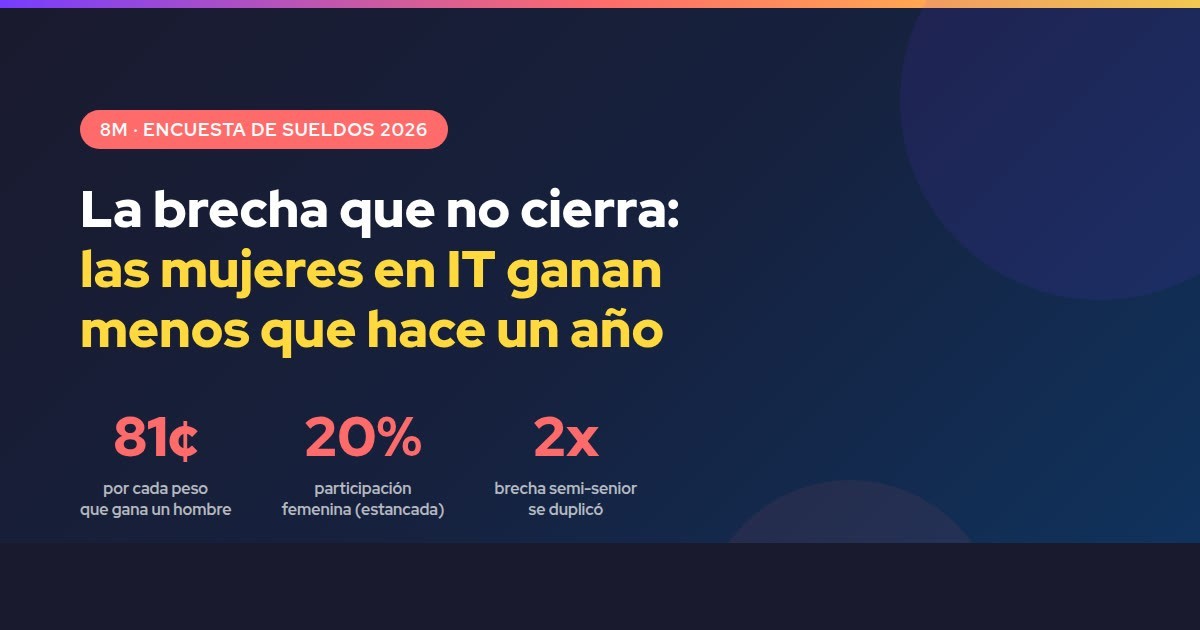
The 2026 data reveals a stagnating landscape: for every peso a cis man earns in the industry, a cis woman receives just 81 cents. This figure represents a step back from the previous year, when the ratio was 83 cents, returning to levels close to those of 2024.
Despite sustained growth in the sector, the overall gender pay gap remains at 19% to the detriment of women.
Key findings from the 2026 edition
- Setback at Semi-Senior levels: The pay gap in mid-experience positions jumped from 5% in 2025 to 11% in 2026, doubling the inequality in this segment in just one year.
- Improvement in Seniority: On a positive note, the gap at Senior levels decreased from 19% to 13%.
- Stagnant participation: The percentage of women in the tech industry has not been able to break through the 20% ceiling, maintaining the same representation as in 2025.
- Growth in retention: An encouraging finding is the increase of women with more than 13 years of experience, which went from 8% to 11%, suggesting greater long-term retention of female talent.
Role segregation: What do they work on?
The report highlights that, while Developer is the most common role for both genders, there are marked differences in technical specializations:
| Top Roles - Men | Top Roles - Women |
|---|---|
| SysAdmin / DevOps / SRE | QA / Tester |
| Manager / Director | Manager / Director |
| Technical Leader | UX/UI Designer |
| Architect | BI Analyst / Data Analyst |
Women surveyed show a greater presence in QA, UX/UI Design and Data Analysis, while men predominate in infrastructure (DevOps/SRE), systems architecture and information security (Infosec).
Education vs. Reward
Historically, the Openqube survey has shown that women in IT have a higher educational level: 30% have completed university degrees, compared to 22% of men. However, this greater academic background still does not translate into real salary parity or equitable access to leadership positions, where female representation is just 16% of all management roles.
Full report available at: openqube.io/sueldos